Tuesday, February 4, 2014

Museo Maya de América

Interior exhibit concept showing Maya stele.
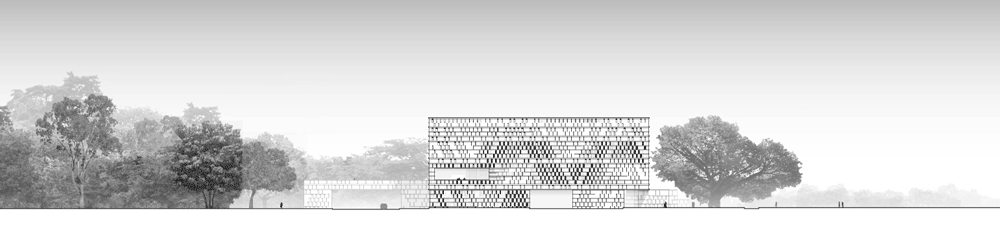
The Museo Maya de América, set to be located in La Aurora Park, Guatemala City, Guatemala, will be the largest museum of Mayan culture in Central America. The museum is designed to mimic a modern evolution of Maya style architecture as a monolithic creation set in an open green space in the city. The massive cantilevered building, designed by Harry Gugger Studio and Boston office over, is a massive stone block broken by openings designed to allow natural light and airflow into the museum's interior spaces.
Exterior concept, designed as a monolith in the center of an open green space to mimic monumental Maya temple architecture. 
The interior courtyard feature of the museum is an eight-story central space that will be planted with lush greenery. This sunken area is designed to mimic the cenote, natural sinkholes that occur throughout Central America that were considered sacred spaces by the Maya. Cenote acted as a connection between the world of the living and the underworld and often served as burial sites. This relationship in the design of the Museo Maya de América and traditional Maya culture strengthens the goals of the building design.

Interior courtyard concept, inspired by the cenote that were considered sacred by the Maya.
Despite the positive intent of the Museo Maya de América, it is surrounded by a great deal of controversy. First, the design is constantly under attack, from its relationship to true Maya monumental architecture to the representation of the cenote in the central courtyard. Arguments suggest that it is more a deconstructivist monstrosity than a reflection of the evolution of Maya architecture. Naysayers also disapprove of the courtyard representing a cenote, arguing that the relationship is a stretch at best and is merely a construct of the designers to attempt a true connection to Maya culture. Another criticism of the design is that it was the result of a direct commission, rather than a design competition.

Another key argument against the Museo Maya de América is that its location will be the site of the current Mercado de Artesanias, a handicraft market for local merchants in Guatemala City. The market is currently #2 on the list of the top things to do in the city. Many argue that it is "ironic that we don't really care about the history of our country, instead we choose to destroy the things that are iconic symbols of Guatemala."

Construction of the Museo Maya de América is expected to start in 2015 with completion by 2017.

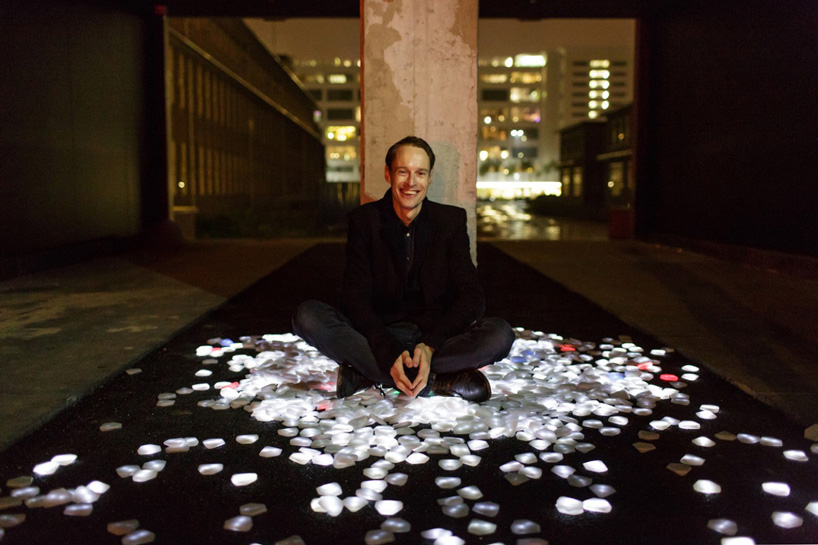
Crystal by Dan Roosegaarde


Daan Roosegaarde: "People can do what they want with my Crystal installation" from Dezeen on Vimeo.

Dan Roosegaarde's fabulous Eindhoven installation, Crystal, truly exemplifies the connection between art, artist, and the community. Crystal consists of thousands of LED crystals. These wireless, battery-free tokens are illuminated by the weak magnetic field that runs through their display platform. Visitors are free to play with the crystals as they please - they can arrange them, stack them, spell out messages, even steal them.

This exhibit truly embraces art as a temporal creation. Roosegaarde accepts that though these "light-up Legos" are an asset to the community, they are also prone to be stolen at any time. While he recognizes this heartbreak, he has developed a way to cope. By releasing this installation to the public, it is something that simply began as his and will live as theirs. As he terms it, it is ecological - it will take on a life of its own within the community at Eindhoven.

Crystal has been previously exhibited in Amsterdam, Paris, and Moscow. The installation was purchased by the city of Eindhoven in 2012 and will be on permanent display for the next 10 to 15 years. Roosegaarde has released the design schematic for his LED crystals to the public and to several manufactures in the area, allowing others to create their own unique crystal designs. This ensures that the project will be an organic entity that can grow with the city, replacing the stolen crystals and replacing them with ones designed by the people who use it most. It will continue to live beyond Roosegaarde's original design, a concept that he believes is truly beautiful.

If you happen to be in The Netherlands, visit Crystal at Kastanjelaan 500 in Eindhoven.